As the world continues to embrace the digital revolution, the concept of a traditional work environment is consistently being reshaped. Today, remote work has become a significant part of this transformation, offering companies and employees unprecedented flexibility and efficiency.
As remote work becomes increasingly prevalent, several key trends have emerged, shaping the future of our professional lives.
Work-life Balance Takes Center Stage
The shift towards remote work has been propelled by a strong desire among professionals for better work-life balance. Today, many employees are prioritizing jobs that offer flexible schedules over those with rigid work hours.
This allows them to incorporate their personal activities and responsibilities seamlessly into their workday, leading to improved productivity, less stress, and higher job satisfaction.
Emergence of Cloud-Based Technologies
As businesses adapt to the virtual work environment, the demand for cloud-based technologies is increasing.
These tools enable employees to collaborate, share files, and manage their tasks from anywhere in the world. The growing popularity of platforms such as Google Drive, Zoom, Slack, and Asana exemplifies this trend.
Increased Focus on Employee Wellness
As remote work eliminates the daily commute and reduces the stress of office politics, companies are turning their focus towards employee wellness. Employers are incorporating virtual wellness programs, mindfulness sessions, and mental health support into their culture, recognizing that a healthy team is a more productive one.
Digital Nomads on the Rise
The remote work trend has given rise to a new breed of professionals: digital nomads. These individuals leverage the freedom of working remotely to travel and explore new locations while maintaining their careers.
This lifestyle appeals to those seeking experiences beyond the confines of an office, further driving the shift towards remote work.
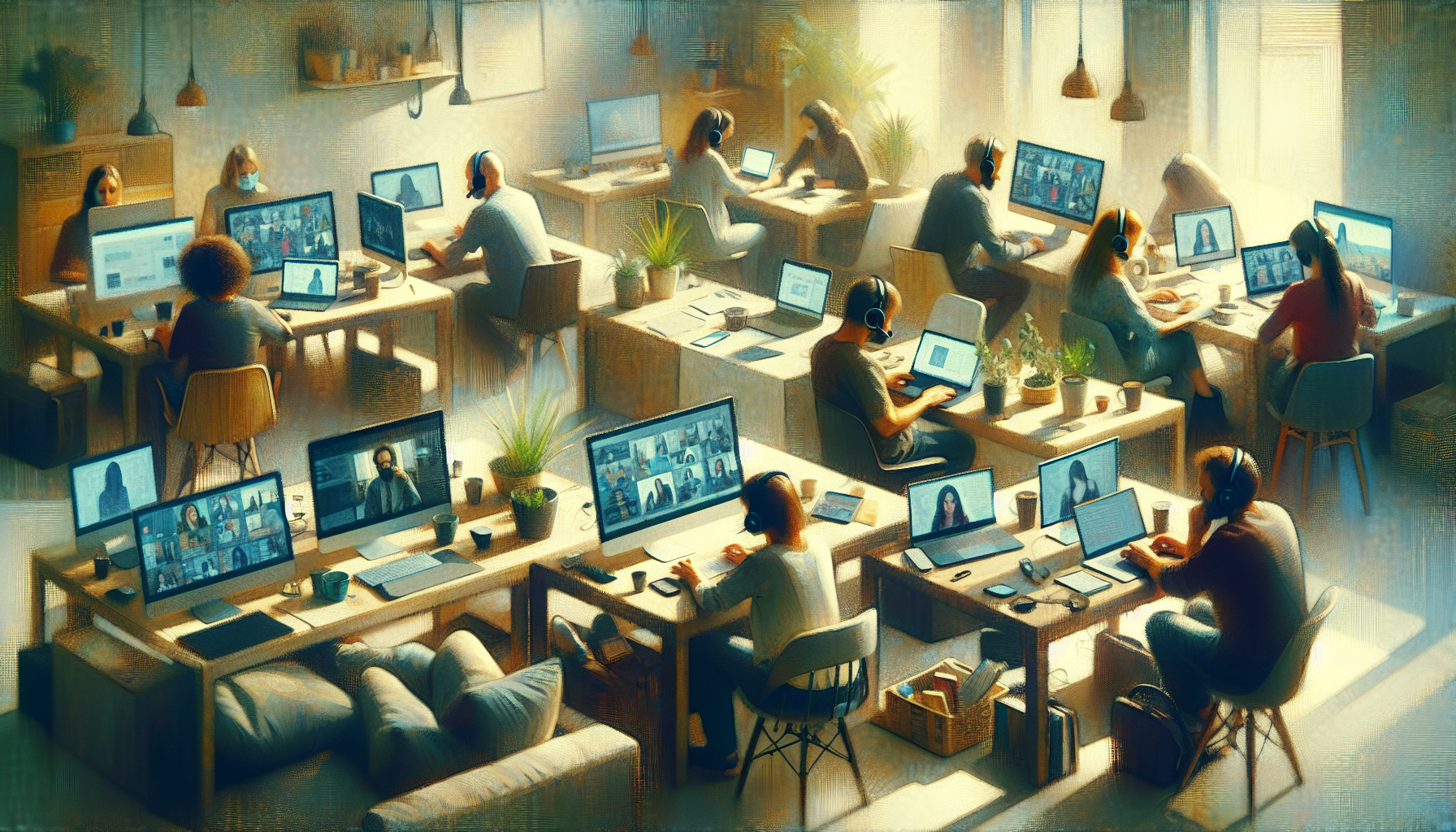
Coworking Spaces Gain Popularity
For those who miss the sense of community and structure of a conventional workplace, coworking spaces are an emerging trend.
These shared workspaces bring together remote workers, freelancers, and entrepreneurs, fostering collaboration and networking in a dynamic environment.
Hybrid Work Models Emerge
While many companies have moved to fully remote models, the hybrid approach is gaining momentum.
In this model, employees split their time between working from home and the office, enjoying the benefits of both environments. Hybrid work models allow for greater flexibility while maintaining the social and collaborative aspects of office work.
Remote Work Training and Development
With the shift to remote work, there’s a growing need for training programs that equip employees with the skills to succeed in a virtual environment. Topics like digital literacy, online communication, remote team management, and maintaining work-life balance are becoming critical elements of professional development.
As we navigate this era of remote work, these trends are shaping the future of how we work, collaborate, and balance our professional and personal lives.
Companies that adapt to these trends and offer their employees the flexibility and support to work remotely are likely to have an edge in attracting and retaining top talent. Whether you’re an employer or an employee, staying in tune with these trends will help you thrive in the ever-evolving professional landscape.
Leave a Reply