Every office — whether fully remote, hybrid, or on-site — can get more done with a few targeted changes to habits, tools, and space. Productivity isn’t about longer hours; it’s about clearer priorities, fewer interruptions, and smarter systems. Below are high-impact strategies that are easy to implement and sustain.
Prioritize with intentional planning
– Time-block your calendar for focused work and meetings.
Reserve morning blocks for deep tasks when cognitive energy is highest, and cluster meetings into afternoons to preserve momentum.
– Use a simple daily MIT (most important task) list: identify 1–3 outcomes that must happen that day and protect time for them.
– Apply the two-minute rule: if a task takes less than two minutes, do it immediately to avoid task pile-up.
Create a distraction-resistant environment
– Turn off nonessential notifications and set clear email-checking windows (e.g., mid-morning, after lunch, late afternoon). Email triage prevents constant context switching.
– Use focus techniques like Pomodoro or deep work sessions: 25–50 minutes of dedicated work followed by a short break keeps attention high without burnout.
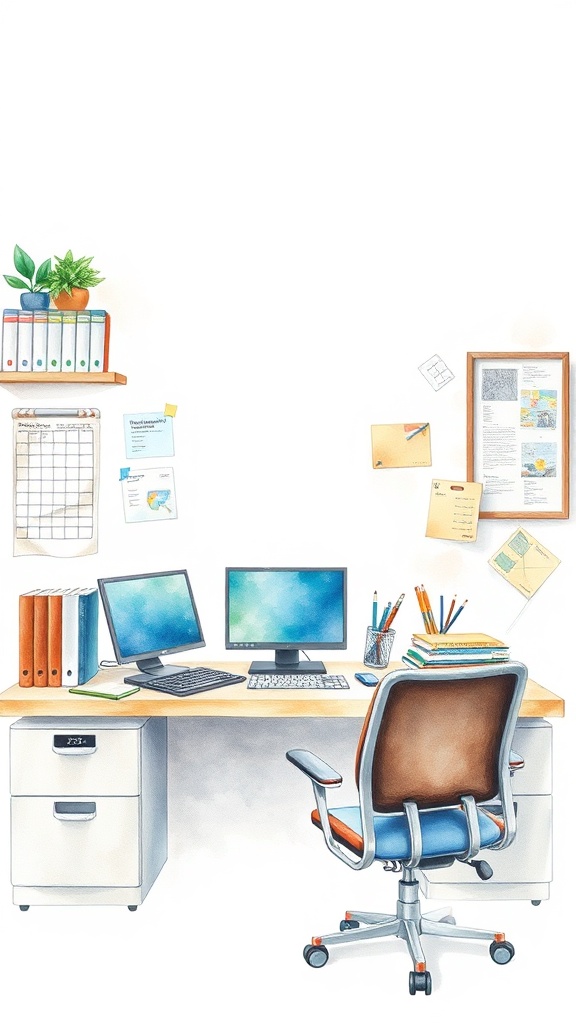
– Design your physical space for flow: ergonomic chair, correct monitor height, good lighting, and a decluttered desk reduce micro-stressors that sap cognitive energy.
Streamline communication and meetings
– Make every meeting purposeful: distribute an agenda, define desired outcomes, and time-box sessions.
If a meeting can be replaced by a short asynchronous update, choose that route.
– Adopt concise communication norms—use subject-line clarity, action-oriented summaries, and explicit next steps to avoid follow-up chains.
– Encourage asynchronous collaboration for status updates and decision drafts. A shared document or thread with version control reduces redundant conversations.
Automate repetitive work
– Identify recurring tasks that can be automated: reporting, file naming, reminders, and data syncing. Automation reduces human error and frees up time for strategic work.
– Create reusable templates for emails, meeting notes, and project plans.
A consistent structure speeds onboarding and helps teams jump straight into work.
– Leverage keyboard shortcuts, macros, and text expanders to shave minutes off common actions; those minutes compound into hours saved over weeks.
Organize knowledge and workflows
– Maintain a central knowledge base with searchable documentation: processes, templates, and onboarding materials.
This reduces interruptions for routine questions and preserves institutional memory.
– Use project boards or task lists with clear owners and deadlines. Visual workflows (Kanban-style) make bottlenecks obvious and priorities transparent.
– Regularly prune and archive outdated files to keep digital workspaces light and findable.
Protect energy to sustain performance
– Build micro-recovery into the day: brief walks, eye breaks, and hydration restore focus.
Encourage short, purposeful breaks rather than scrolling through social media.
– Respect end-of-day boundaries to prevent chronic fatigue.
When work has a predictable rhythm, focus periods are more productive.
– Rotate demanding tasks with lighter administrative work to avoid cognitive depletion.
Start small and iterate
Pick two or three strategies to test for a few weeks—time-blocking, meeting rules, and one automation, for example. Measure impact by tracking time spent on focus work, meeting hours, and task completion rates. Small, consistent changes compound faster than sweeping overhauls.
Adopting a few practical habits and systems transforms how work flows through a team.
The result is less noise, clearer priorities, and more time to do the work that matters.
Leave a Reply